In the early nineties, when I started my career in IT, writing software meant writing every single instruction by hand. C was king. You told the machine exactly what to do, byte by byte, pointer by pointer. There was beauty in that precision, and also a brutal limitation. The mental overhead consumed enormous human energy, and most of it was wasted on mechanics rather than meaning.
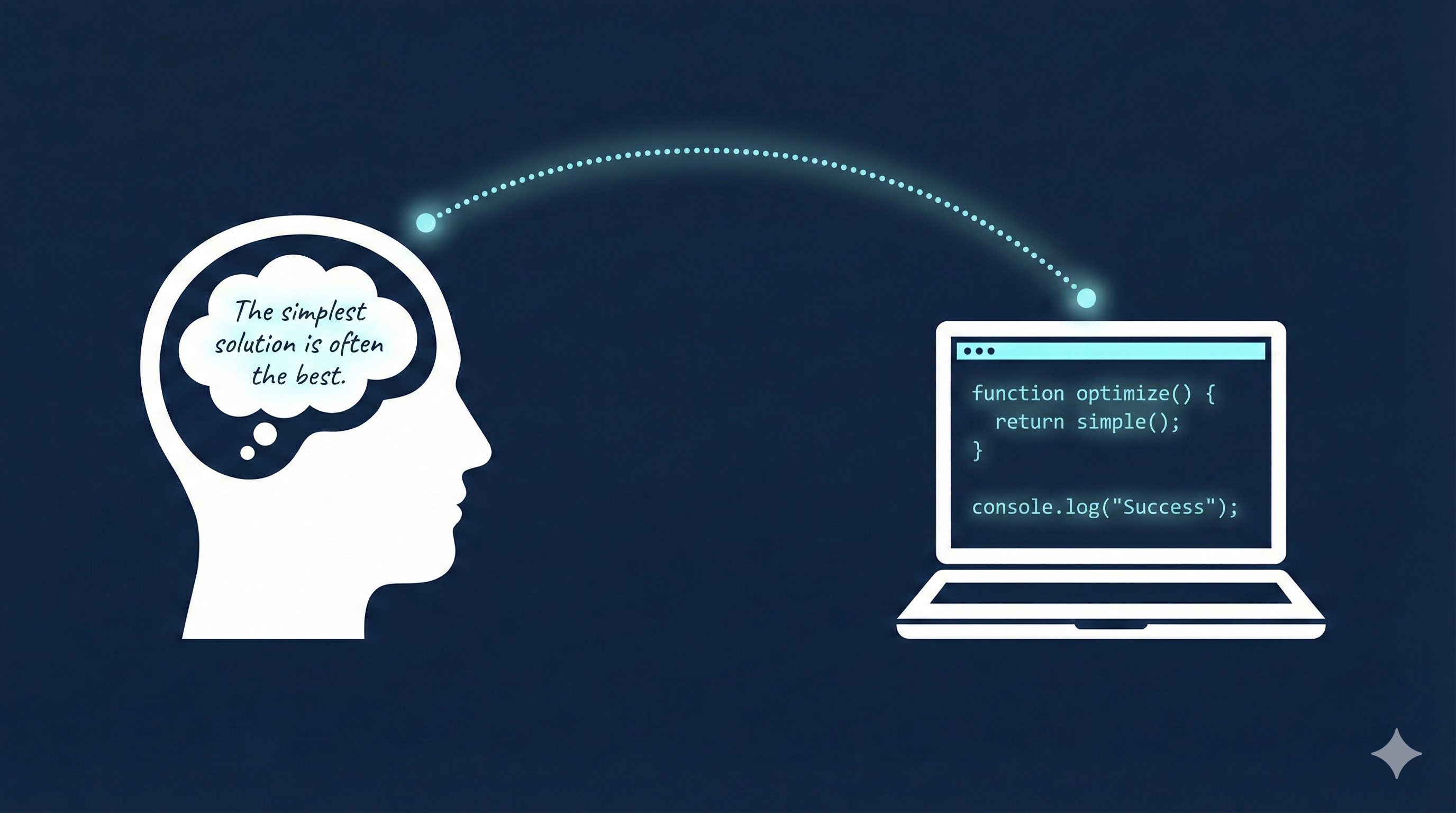
Did Object Orientation solve the problem?
Object orientation promised salvation. Java and C++ shifted the abstraction one level up. Suddenly we talked about things rather than operations. Classes, interfaces, polymorphism. In theory this modelled the real world better. In practice it generated enormous amounts of boilerplate, heated debates about design patterns, and the rise of the “architect” as a separate species. The productivity gains were real but also came with new complexity layers. We traded one set of problems for another.
Then came Python, and with it the age of expressiveness. Write less, mean more. The scripting world invaded enterprise development. Ruby on Rails showed that a small team could build in weeks what previously took months. The abstraction level climbed again.
So what is the next step?
Looking at where we are in 2025, I believe we are witnessing the most fundamental shift in the entire history of programming. The abstraction is no longer about how to express logic in a language. It is about expressing intent in human language, and letting a model translate that into executable code. This is not an incremental evolution. This is a paradigm change comparable to the jump from assembly to high-level languages.
The trajectory is clear: from machine instructions to structured code to objects to functions to natural language. Each step removed one layer of mechanical translation from the developer’s mind. AI removes the last one.
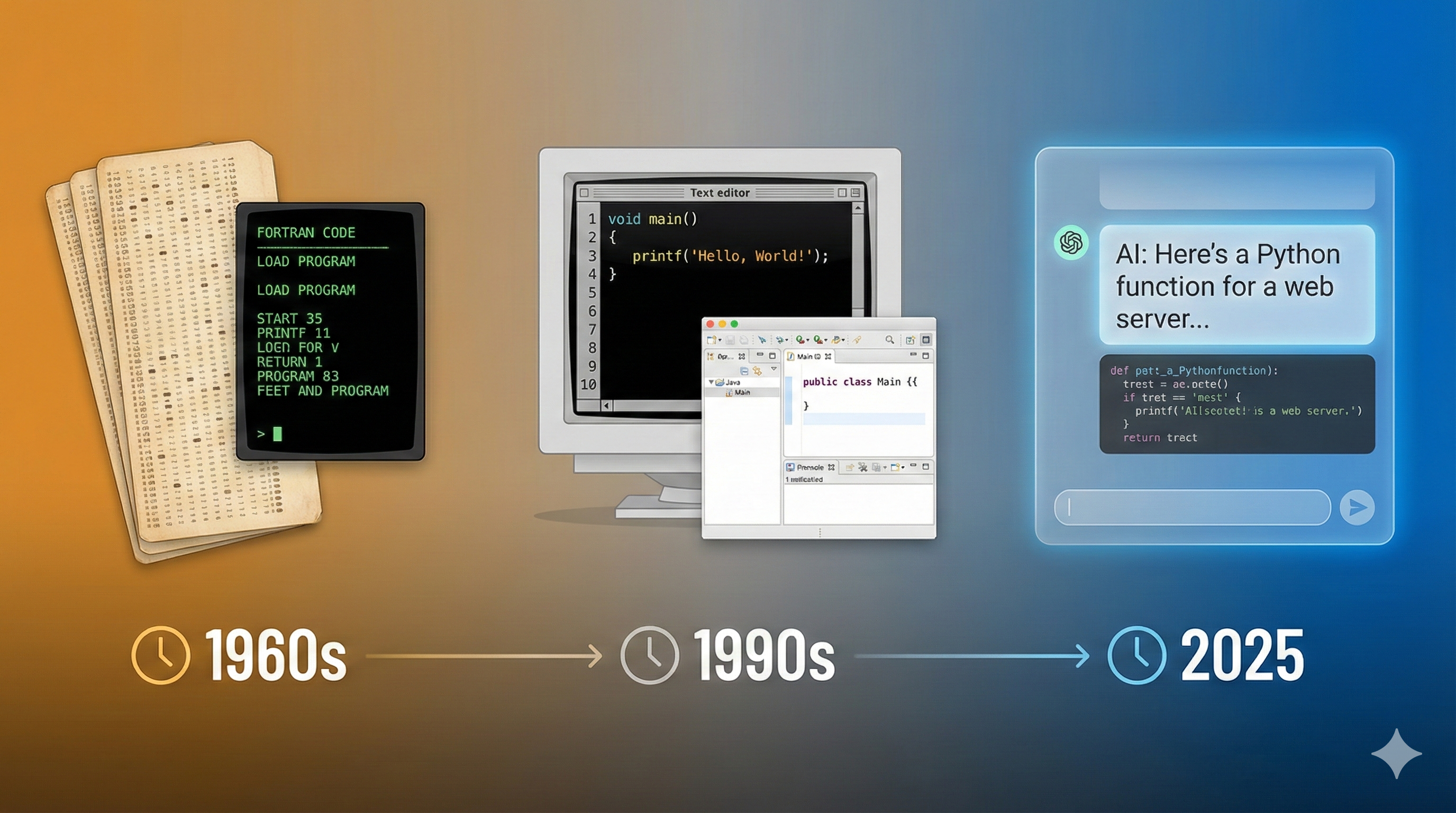
What this means for teams building software today is profound. The question shifts from “who writes the best code” to “who formulates the best intent.” The language model handles the rest. Developers who understand this shift will adapt. Those who think it is just a fancy autocomplete will be left behind, and probably soon.
The 35-year arc of computing has always been about raising the level of abstraction. We are now at the top of that arc, and the view is remarkable.
 ctoblog