The Three Branches of AI-Driven Development: Why Software Engineering Needs Its Own Separation of Powers


Over the last two years, a quiet revolution has taken hold in how software gets built. Large frontier models from major AI labs have matured to a point where they do not just assist with coding. They reshape the entire lifecycle of how software moves from idea to production. And with this shift comes a question that few enterprise technology leaders are asking loudly enough: if anyone can now generate code, who is responsible for making sure it is the right code?

I have been thinking about this through an unusual lens. The structural principle that democratic societies use to prevent unchecked power applies remarkably well to AI-driven development. Legislative, Executive, Judicial. Specification, Code Generation, Quality Review. Three branches, each essential, none sufficient alone.

The Democratization Nobody Expected

For decades, writing software was a craft reserved for those who understood syntax, compilers, and the particular pain of a misplaced semicolon. Today, state-of-the-art foundation models can generate entire modules from a natural language description. A product manager can describe a feature and get working code within minutes. A domain expert with no programming background can prototype a data pipeline overnight.

This is genuine democratization. But democratization without structure leads to chaos. When everyone can generate code but nobody owns the specification or validates the output, you get “vibe coding” — throwing prompts at an AI and hoping for the best. It works for demos. It fails for production systems.

What the industry needs is not less AI involvement. It needs governance. It needs separation of concerns at the process level.

The Legislative Branch: Specification as Law

In a functioning democracy, the legislature writes the laws. In spec-driven development, the specification is the law. It defines intent, constraints, and architecture decisions before a single line of code is generated.

This is exactly what frameworks like Spec Kit have formalized. The open-source toolkit treats specifications not as disposable documentation that rots the moment code is written, but as living, executable artifacts. Commands like /specify, /plan, and /tasks structure the workflow around intent first, implementation second. Code serves specifications, not the other way around.

The BMAD Method takes this further with its multi-agent approach. Specialized AI agents — an Analyst, a Product Manager, an Architect — collaborate to produce comprehensive requirement documents and architecture specifications before any development agent touches the codebase. The “Agentic Planning” phase is essentially a legislative process: multiple perspectives debating and refining the rules that govern implementation.

The human role here is critical. You are the lawmaker. Advanced reasoning systems help you articulate requirements and stress-test architecture decisions. But the intent, the business logic, the “why” — that remains yours.

The Executive Branch: Code Generation as Implementation

The executive branch implements laws, it does not write them. In our metaphor, this is where advanced coding systems from major AI labs do their most visible work. Given a well-defined specification, new generation reasoning systems produce code with remarkable speed and consistency.
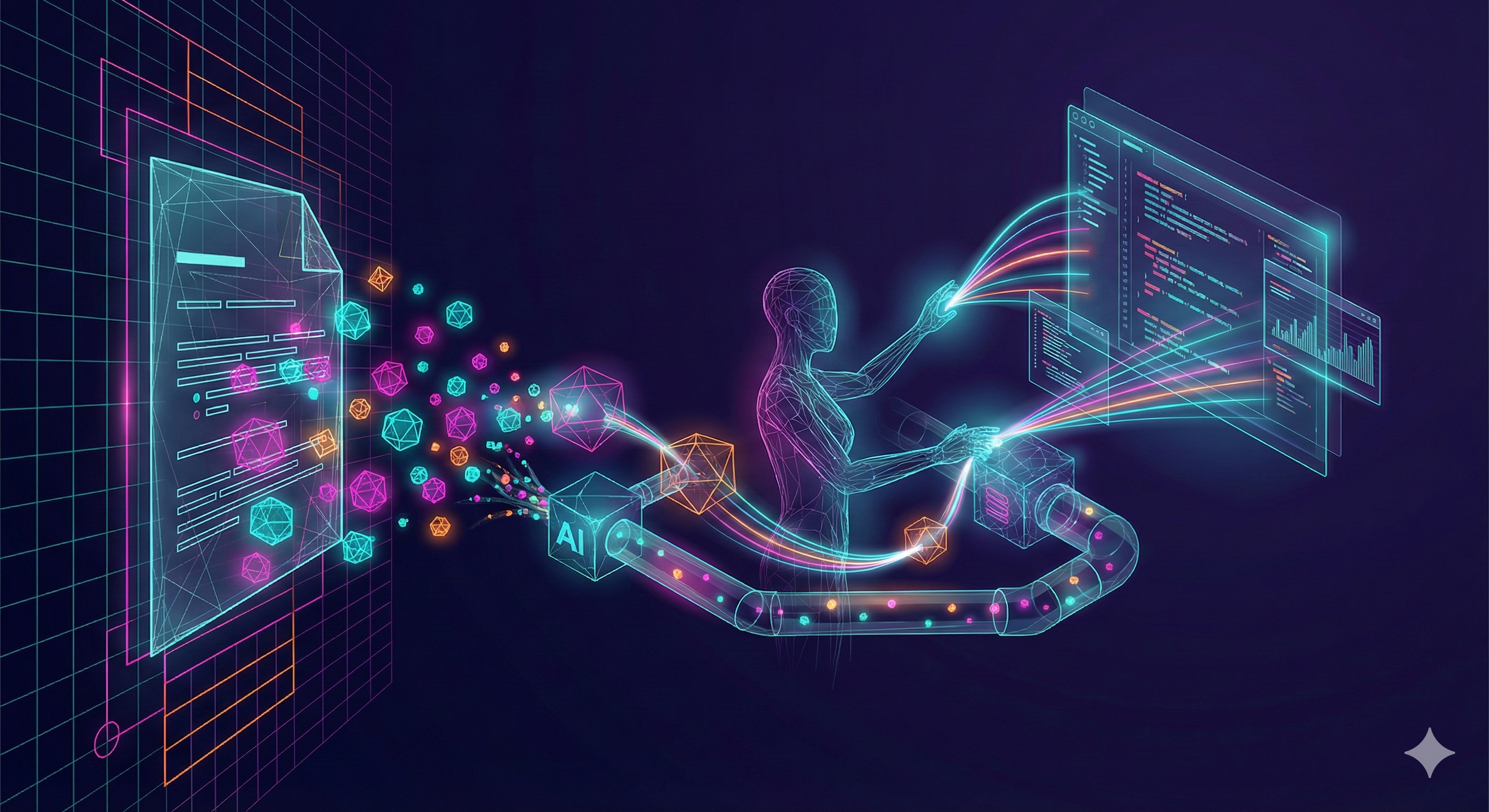
BMAD’s “Context-Engineered Development” phase illustrates this well. The Scrum Master agent breaks the specification into hyper-detailed story files containing full architectural context, implementation guidelines, and testing criteria. The development agent works from these self-contained packages — no context collapse, no re-explaining requirements.

Spec Kit follows a similar philosophy. The specification constrains the generation. Security requirements and compliance rules are baked into the spec from day one, not bolted on after.

The efficiency gain is real. But so is the risk. An executive branch without checks becomes authoritarian. Code generation without validation becomes technical debt at machine speed.

The Judicial Branch: Quality Review as Constitutional Court

The judiciary reviews whether the executive acted within the law. In software, this is the quality gate — code review, testing, validation, compliance checking. This is where current AI-driven development is weakest.

Too many teams generate code with frontier models and then skip meaningful review because the output “looks right.” This is the equivalent of a government without courts. Both BMAD and Spec Kit recognize this gap. BMAD includes rigorous pull-request reviews where humans and AI agents inspect generated artifacts, creating a “continuous compliance ledger” — an auditable trail from requirement to deployment. Spec Kit provides an /analyze command that acts as a quality gate, checking internal consistency of specs and plans.

But tooling alone is insufficient. A model can tell you whether code compiles and passes tests. It cannot tell you whether the code solves the right problem for the right user in the right regulatory context. Validation, critical reasoning, architectural thinking — these are not nice-to-have skills. They are the judiciary of your development process.

Beyond Code: Agents, Decisions, and the Vanishing Middle Layer

This separation of powers extends beyond code. Across the enterprise, AI agents are replacing traditional applications. Instead of building a reporting dashboard, you configure an agent workflow that queries data and delivers insights. Instead of a project management tool with seventeen tabs, you define the outcome and let orchestrated agents handle the rest.

Less management overhead, more focus on core tasks. Decision-making improves because data becomes accessible through natural language rather than complex BI tooling. But the three-branch principle still applies. Someone specifies. The model executes. Someone validates. Without all three, you have automation without accountability.

What Does This Mean for IT Specialists?

If you are a developer today, your value is shifting. Writing code from scratch becomes a smaller part of the job. Specifying what should be built, reviewing what was generated, and understanding why architectural decisions matter — this is where human professionals become irreplaceable.

The psychological impact should not be underestimated. Many engineers built their identity around the craft of writing code. Being told that a model can do this in seconds is unsettling. But the constitutional metaphor offers a reframe. You are not being replaced by the executive branch. You are being promoted to the legislature and the judiciary.

The learning pressure is significant. Writing specifications that frontier models can execute against, developing the critical eye to catch subtly wrong generated code, understanding frameworks like BMAD or Spec Kit — these skills must be learned on the job, now.

For technology leaders, the message is clear. Do not let your teams generate code without specification governance and quality review. Build the three branches into your SDLC. Treat specification as a first-class engineering activity. Invest in your people’s ability to think critically about machine-generated output. The models are capable. The tools exist. What is missing is the governance mindset. It is time to build it.


The Quiet Rewiring: How Advanced AI Systems Are Reshaping the Fabric of Enterprise IT


Over the last three years, something fundamental has shifted beneath the surface of enterprise technology. It did not arrive with a press release or a migration deadline. It came through the daily work of developers, platform engineers, and IT specialists who started to notice that their tools had become collaborators. After thirty-five years in this industry, from mainframes through client-server, from virtualization through cloud-native, I can say with some confidence: this shift is different. Not because the technology is louder, but because it is quieter and deeper than anything before.

From Writing Code to Owning the Lifecycle

For decades, the developer’s identity was built around writing code. Good code. Clean code. Clever code. But the role has been expanding for a while now, and large frontier models have accelerated that expansion dramatically. Today, a developer who only writes code is already behind. The expectation has moved toward lifecycle ownership — from initial design through deployment, observability, and incident response.

I remember when we introduced CI/CD pipelines in our organization around 2015. It took almost two years before the development teams truly owned them. Now, advanced coding systems from major AI labs generate not just the application logic but also the pipeline definitions, the infrastructure-as-code templates, and the test scaffolding. The developer’s job is no longer to produce all of this. It is to understand, validate, and take responsibility for it.

This is a cultural shift, not a tooling upgrade. And it puts enormous learning pressure on people who were already stretched thin.

AI as a Reasoning Partner, Not a Magic Box

State-of-the-art foundation models today can refactor legacy code, generate comprehensive test suites, produce documentation that is actually readable, and suggest architectural patterns that would have taken a senior engineer hours to draft. I have seen this firsthand — a platform team in one of my previous engagements reduced their infrastructure documentation backlog by seventy percent in three months, using new generation reasoning systems as their drafting partner.

But here is the part that gets lost in the excitement: these systems do not understand your business context. They do not know why that particular microservice has a strange retry logic that was added after a production incident in 2019. They do not carry the institutional memory. The risk of over-reliance is real and already visible. I have reviewed pull requests where the generated code was syntactically perfect and architecturally wrong. The skill that matters now is not prompting. It is critical reasoning, validation, and the ability to say “this looks correct but it is not right for us.”

AI amplifies capability. It does not replace responsibility.

Prompt Engineering Dies — System Design Lives

There was a brief period, maybe eighteen months, where everyone talked about prompt engineering as if it were a new discipline. People wrote courses about it, built careers around it. I was skeptical then, and the trajectory has proven that skepticism right. The single-prompt optimization is becoming irrelevant at a speed that should concern anyone who invested heavily in that narrow skill.

What replaces it is far more interesting and far more demanding. Multi-agent orchestration, workflow design, memory architectures, context management across complex reasoning chains — this is system design, not prompt crafting. The prompt engineer is becoming the AI system architect, and that requires a fundamentally different skillset. You need to understand how state flows through distributed reasoning processes, how to design fallback strategies when one agent produces unreliable output, and how to build guardrails that are structural rather than textual.

In my own work, I have moved from asking “how do I phrase this better” to asking “how do I design this workflow so that the output is reliable regardless of how each individual step performs.” That is an engineering mindset, not a linguistics exercise.

The Enterprise Beyond Applications

Something else is happening in the enterprise that deserves attention. The traditional model of building or buying applications for every business function is dissolving. In its place, AI agents and intelligent workflows are emerging — , Software Development Lifecycleot as fancy automation scripts, but as genuine decision-support systems that operate on massive amounts of data that no human team could process manually.

I spent years in organizations where middle management existed primarily to aggregate information from below and pass summarized decisions upward. Large frontier models are compressing that chain. Not by eliminating people, but by removing the friction of information synthesis. A security operations team that used to spend four hours triaging alerts before making a decision can now have an AI agent pre-analyze, correlate, and present a recommended action path within minutes. The human still decides. But the human decides faster and with better data.

Less management overhead. More focus on the core of the task at hand. This is not a slogan — it is what I am observing in real organizations right now.

The Psychological Weight of Constant Adaptation

What I do not see discussed enough is the psychological impact on the people living through this transformation. Every six months, the capabilities of advanced reasoning systems take another leap. Every six months, the baseline expectation for what a single engineer should be able to deliver shifts upward. This is exhausting. I know because I feel it myself, and I have been adapting to technology shifts for three and a half decades.

The pressure to continuously learn, to re-evaluate what you thought was a stable skill, to accept that your hard-won expertise in a specific area might be commoditized within a year — this is not trivial. Organizations that ignore this human dimension while chasing productivity gains from AI will find themselves with burned-out teams and high attrition. The technology is only as good as the people who guide it, and those people need support, time, and psychological safety to adapt.

So What Changes for People?

Everything and nothing. The fundamental truth of enterprise IT remains: humans build systems for other humans, and someone must be accountable when things go wrong. What changes is the layer between intention and execution. That layer is now filled with powerful reasoning systems that can draft, suggest, generate, and analyze at a scale we never had before.

For developers, the path forward is clear: become the person who understands why, not just how. For platform engineers, it means designing systems where AI agents and human operators work in well-defined boundaries. For security engineers, it means building Zero Trust not just for networks but for AI-generated outputs. And for IT leaders, it means accepting that the most important investment right now is not in technology. It is in the people who must learn to work alongside it.

After thirty-five years, I have learned that technology always promises more than it delivers in the short term, and delivers more than we imagined in the long term. The frontier models we see today are no exception. But the transition — the human transition — that is where the real work happens. And that work is happening right now, in every team, in every organization, whether we acknowledge it or not.